Stability: Sometimes More Important Than the Camera
13 March 2026
 23
23

Helvy Giovanny Sierra Vargas, scientific photographer and lecturer specializing in scientific imaging, Universidad del Rosario (Colombia).
My scientific photography students often believe that the most important factor is having the best camera or the most advanced lens. However, in many situations the stability of the equipment has a much greater impact on the final result.
There is little benefit in using a full-frame camera with more than 40 megapixels and a 2X macro lens if our hands are not exactly as steady as a surgeon’s. Even a small movement can ruin the sharpness of an image (a phenomenon known as camera shake), something especially critical when documenting specimens, insects, or microscopic structures.
This is where a tripod becomes a fundamental tool. A good support keeps the camera completely still during the exposure, improving sharpness and making it possible to work with long exposures, focus stacking using a micrometric rail, or controlled lighting.
In scientific photography, stability does more than improve image quality: it also helps produce more consistent and reproducible records, which is important when photographs are part of documentation or research processes.
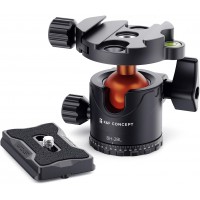
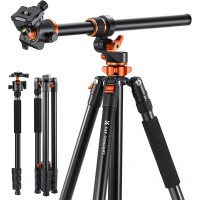
However, not every tripod is suitable for this purpose. Factors such as ground vibration, wind, or the weight of the equipment can affect stability. For this reason, very lightweight tripods or those with poorly designed structures can reduce image quality and even put the equipment at risk. I had the opportunity to test a tripod from K&F Concept (K&F Concept T254A7 Tripod with BH-28L Ball Head), which has proven especially useful both in fieldwork and in laboratory environments.
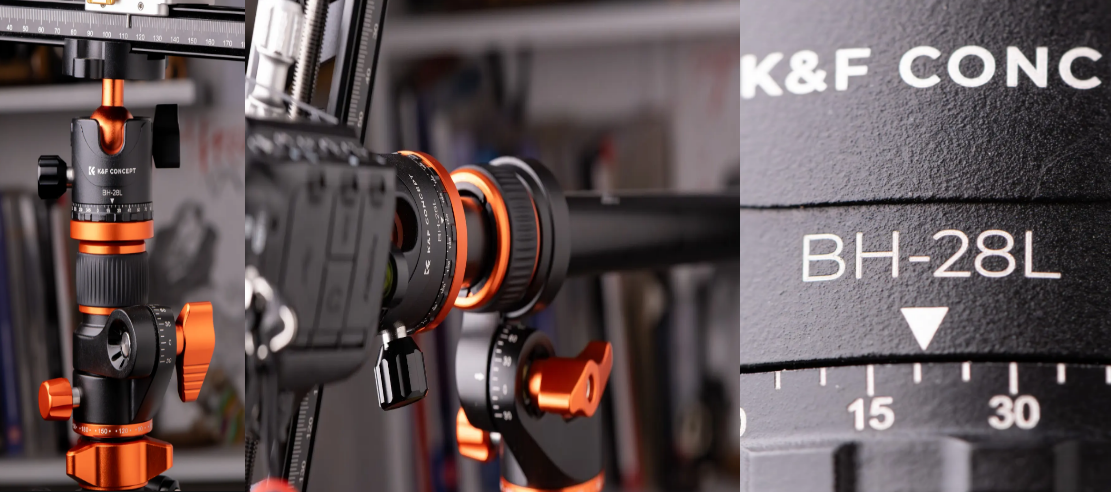
One of the most interesting aspects of this tripod is its extension system and angle adjustment mechanism. This type of flexibility allows photographers to achieve shots that are normally difficult to obtain, such as steep shooting angles or configurations close to the ground—situations that are common in macro photography or when documenting specimens.
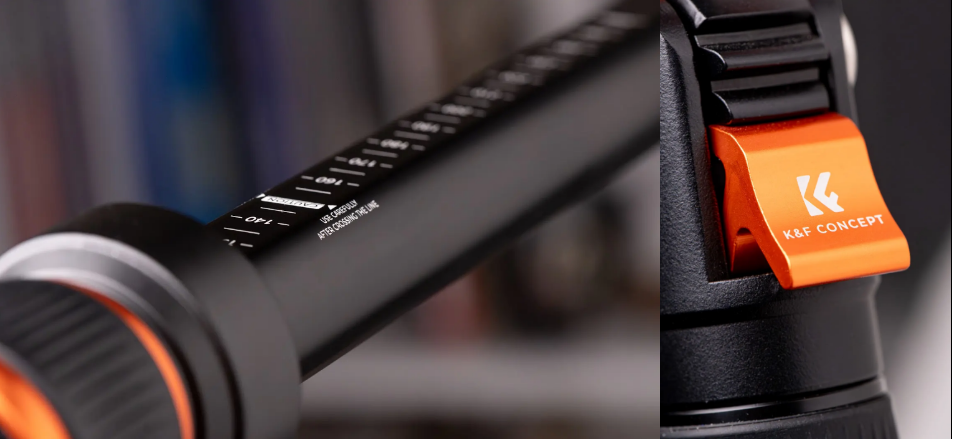
In addition, the tilt and extension markers help achieve more precise adjustments in the camera’s position, making it easier to maintain control over framing and composition during the shot. The tripod also features a robust construction that provides confidence when working with photographic equipment. Its solid hardware in the ball head keeps the camera firmly in place, something that does not always happen with more basic tripods and that, in my experience, was a significant difficulty.
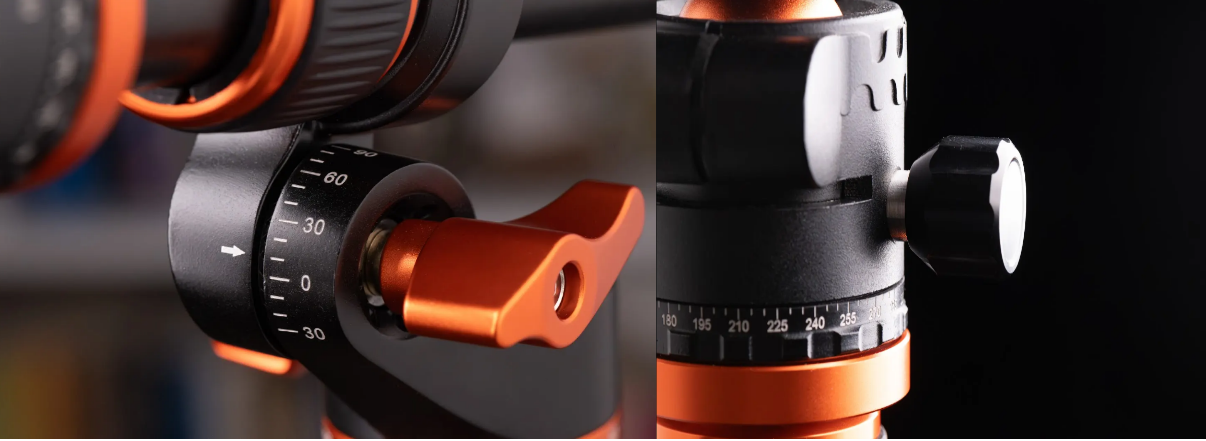
Ultimately, having a good tool in scientific photography increases the chances of obtaining a sharp image. However, the quality of the final result does not depend only on the most advanced equipment, but also on the ability to control the conditions under which the image is captured. In many cases, a good tripod can make a bigger difference than upgrading the camera or lens.


ALL COMMENT 12

It's sound good
2026-04-05 12:08:58


Helvy Giovanny Sierra Vargas Thanh Vinh
Thank you
2026-04-10 04:21:45


great article. i love the clearly pictures of all the details
2026-03-28 19:51:45
Helvy Giovanny Sierra Vargas oferhazan78
Thank you
2026-04-10 04:20:35

Almost no person understands how useful and necessary a tripod is, where most people could read this, they would understand, thank you for the contribution of knowledge.
2026-03-26 12:39:26
Helvy Giovanny Sierra Vargas Luo Quintero
with pleasure.
2026-04-10 04:20:58

Hay que entender que son para trabajos específicos, como fotografía científica o astros, donde la técnica se valora al máximo. Pero lo que sí tengo claro es que, aunque uno en un evento no tiene el tiempo para usar las técnicas de un laboratorio, trabajar con soportes de última generación mejora sí o sí el resultado. Esa estabilidad de un trípode profesional te asegura calidad y rapidez en el trabajo normal de uno, como eventos o videos comerciales. Muchas gracias, sería bueno ver un tutorial de fotografía científica acá."
2026-03-23 00:18:40
Carlostock Helvy Giovanny Sierra Vargas
Muchas gracias, y me parece muy bueno profe, estaré atento a las nuevas enseñanzas 🙏
2026-03-28 02:52:21
Helvy Giovanny Sierra Vargas Carlostock
Totalmente de acuerdo, Carlos. En este artículo me enfoco en su aplicabilidad en el proyecto de fotografía científica que adelantamos en la Universidad del Rosario en Colombia, pero para los fotógrafos en general, contar con una buena estabilidad en las tomas hace una gran diferencia en sus resultados, especialmente en tomas complejas con tiempos de obturación amplios. Y sobre fotografía científica iré publicando más material.
2026-03-24 02:34:39

2026-03-19 01:11:39
Thank you! I’m really glad you found it useful.
2026-03-19 02:11:01

Excelente
2026-03-18 14:12:52
2026-03-19 02:08:49



 Your account requires approval before you can login.